
Short answer: No. A standard California homeowners policy excludes damage caused by earthquake shaking and earth movement. To cover cracked foundations, broken walls, and damaged belongings from the quake itself, you need a separate earthquake policy, usually through the California Earthquake Authority (CEA). There is one big exception: California law requires homeowners and renters policies to cover fire caused by or following an earthquake, whether or not you bought earthquake coverage.
Introduction
We are licensed public adjusters, and our firm has more than 40 years of combined experience handling residential and commercial property claims. The questions below are the ones homeowners ask us most after an earthquake, and the answers come from the policy language, the California Department of Insurance (CDI), and the CEA’s own published terms.
What Your Homeowners Policy Does and Doesn't Cover After an Earthquake
Your homeowners policy lists “earth movement” as an excluded peril, and earthquake falls squarely inside that exclusion. So if shaking cracks your foundation, racks the framing, splits drywall, or knocks your TV off the wall, the homeowners policy won’t pay for it.
That is not the end of the analysis, though. An earthquake often sets off other kinds of damage, and some of those are covered under the homeowners policy even though the quake itself is not:
- Shaking damage to the house (foundation, walls, framing, chimney) → Earthquake policy only
- Belongings broken by shaking → Earthquake policy only
- Fire caused by or following the earthquake → Homeowners policy (required by California law)
- Explosion, theft, or broken glass caused by the earthquake → Possibly the homeowners policy, depending on its wording (CDI says to check with your insurer)
- Water from a broken pipe after the quake → Depends on the policy wording; often disputed
- Tsunami or outside flooding → Neither; this needs flood insurance
Most of the money in these claims turns on how the damage is split between the two policies.

What Earthquake Insurance Covers (CEA Policies)
Most California earthquake policies are written through the CEA, a publicly managed, privately funded insurer created after the 1994 Northridge earthquake. You can’t buy directly from the CEA; you buy it through your homeowners insurer, as long as that company participates. Only about 10% of California homeowners carry earthquake coverage, which is why so many people are surprised after a quake.
A CEA homeowners policy has these main parts:
- Dwelling (Coverage A) → Repairs or rebuilds the house. The limit has to match the dwelling limit on your homeowners policy.
- Personal property (Coverage C) → Replaces belongings damaged by the quake. You choose $5,000 or $25,000.
- Loss of use (Coverage D) → Pays extra living costs if you can’t live in the home. Limits from $1,500 to $100,000. No deductible.
- Emergency repairs → The first $1,500 is paid with no deductible (for things like boarding up or shoring).
- Building code upgrade → $10,000 included; $20,000 or $30,000 available. Pays for code-required upgrades during repairs.
- Breakables → $500 included for some breakable personal property.
A note on those personal property numbers: the CEA cut its maximum personal property limit from $200,000 to $25,000 for policies written or renewed from late 2023 onward, and it dropped the optional masonry veneer coverage for brick and stone siding. If you bought a CEA policy years ago and haven’t read the renewal notices, your coverage may look different from what you remember.
Private earthquake insurers (surplus lines and some admitted carriers) also write policies in California. They can offer lower deductibles, higher contents limits, or coverage for things the CEA excludes. Terms vary widely, so compare the actual policy forms, not the marketing summary.
Fire After an Earthquake Is Covered, Even Without Earthquake Insurance
This is the part of the rule most homeowners never hear about. Under California law, homeowners and renters insurance must cover fire damage caused by or following an earthquake. You do not need an earthquake policy for this.
Picture a common scenario. The quake cracks the foundation and snaps a gas line at the water heater. The gas ignites and the kitchen burns. The foundation damage belongs to the earthquake policy, if you have one. The fire damage, and the smoke damage that comes with it, belongs to the homeowners policy, which also carries its usual Additional Living Expense (ALE) coverage and a flat deductible of a few thousand dollars instead of a percentage deductible.
That split has real consequences. If the fire damage gets lumped in with the earthquake damage, it can end up sitting under a six-figure earthquake deductible when it should have been paid under the homeowners policy. It is worth getting the scope of each loss documented separately from day one.
Is Earthquake Insurance Required in California?
No. California doesn’t require homeowners to buy it, and mortgage lenders rarely do. The law does require insurers that sell residential property insurance to offer earthquake coverage. The offer has to come in writing at least every other year and must spell out the limits, deductible, and premium. You have 30 days from the mailing date to accept. If you don’t respond, that counts as a rejection.
So if you’ve been tossing those notices, you’ve been declining earthquake coverage.
How Earthquake Deductibles Actually Work
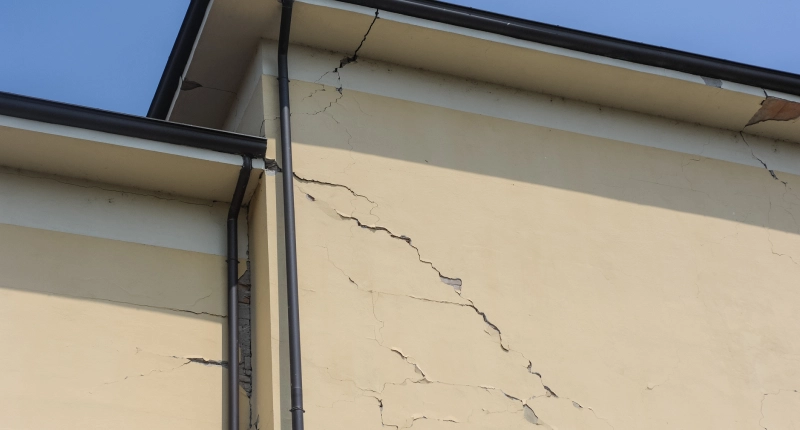
This is the part that catches people off guard. A homeowners deductible is usually a flat amount, like $1,000 or $2,500. An earthquake deductible is a percentage of your dwelling limit. The CEA offers 5%, 10%, 15%, 20%, or 25%.
Some homes can’t choose the two lowest options. The 5% and 10% deductibles aren’t available if your dwelling limit is over $1,000,000, or if the house is a wood-frame home built before 1980 that is not on a slab foundation and does not have a verified seismic retrofit. Those homes start at 15%.
Under the CEA Standard policy, you must meet the dwelling deductible before the policy pays anything for personal property. The Homeowners Choice policy lets you set a separate deductible for belongings, which is waived once you meet the dwelling deductible.
A worked example: Say your home has an $800,000 dwelling limit and a 15% deductible. Your deductible is $120,000.
- If the covered earthquake damage to the house is $90,000, the dwelling claim pays nothing, and belongings aren’t paid either under a Standard policy. Loss of use and the first $1,500 of emergency repairs are still available because they have no deductible.
- If covered damage to the house is $200,000, the policy pays $80,000 ($200,000 minus $120,000), up to your limits. Because you’ve met the dwelling deductible, covered personal property is now payable too.
You never write the insurer a check for the deductible. They subtract it from what they owe. But it means the whole claim depends on the size of the repair estimate. An estimate that misses hidden damage (framing, sill plates, plumbing in the walls, a chimney that has separated) can be the difference between falling below the deductible and getting paid.
What Earthquake Insurance Does Not Cover
Even a CEA policy leaves gaps. According to CDI and the CEA, common exclusions include:
- Land and landscaping
- Swimming pools, fences, and patios
- Detached structures such as a separate garage or guest house
- Masonry, including veneer on newer CEA policies
- Vehicles
- Flood and tsunami water
- Fire (because the homeowners policy covers it)
If your property has expensive hardscape, a pool, or a detached ADU, a CEA policy may leave most of that exposed. That’s one of the main reasons people look at private earthquake coverage.

Is Earthquake Insurance Worth It?
That depends on your finances more than on the odds of a quake. A few honest questions to ask yourself:
- Could you pay for a major structural repair out of pocket? If a $150,000 foundation and framing repair would wipe out your savings, the policy is doing its job even with a high deductible.
- How much equity do you have? A heavily mortgaged home that’s badly damaged still has a mortgage.
- How old is the house, and is it retrofitted? Older raised-foundation homes are the most vulnerable and, without a retrofit, face higher deductibles.
- Would you qualify for help? Federal disaster aid is usually a loan you pay back, not a grant, and it rarely covers a full rebuild.
If cost is the obstacle, look at a seismic retrofit first. It lowers the chance of serious damage, can open up the 5% and 10% deductible options for older homes, and can qualify for a CEA premium discount of up to 25%. California’s Earthquake Brace + Bolt program has offered retrofit grants in many ZIP codes.
What About a Swimming Pool, Fence, or Detached Structure?
These items deserve special attention.
CEA’s basic earthquake coverage generally does not provide the same dwelling coverage for items such as:
- Pools
- Landscaping
- Fences
- Certain masonry
- Separate buildings
A homeowner with substantial exterior improvements should therefore review the policy before assuming those items are insured after an earthquake.
Private earthquake policies may provide different options.
What If the House Already Had Cracks?
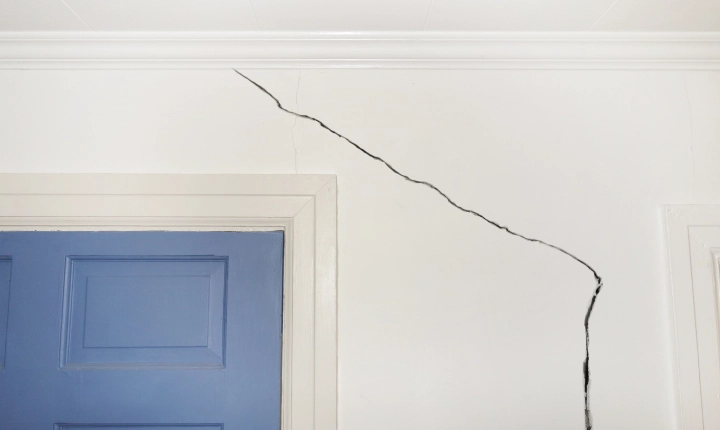
This is where most earthquake claims get contested. Houses settle, concrete shrinks, and drywall cracks at door corners for all kinds of reasons. After a quake, the insurer’s adjuster or engineer may say some or all of what you’re seeing was already there.
The strongest evidence comes from before the earthquake. Look for:
- Old photos and videos of the same rooms (phone galleries and social media are useful here)
- The home inspection report from when you bought the house
- Real estate listing photos
- Prior engineering or foundation reports
- Contractor invoices and remodel photos
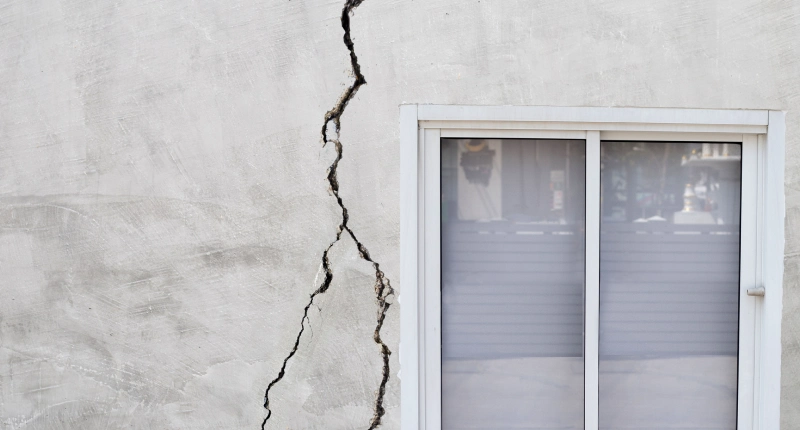
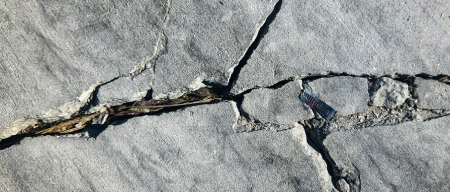
New earthquake damage also tends to look different: fresh, clean edges on cracks; cracks that line up across rooms; doors that suddenly stick; gaps where a chimney meets the house. When the dispute is about structural cause, you usually need your own licensed structural engineer, because the insurer’s engineer works for the insurer.
What to Do After an Earthquake Damages Your Home
- Get safe first. Stay out of rooms with sagging ceilings or leaning walls. If you smell gas, leave and call the utility. Don’t go near downed lines.
- Photograph before you touch anything. Take wide shots of each room and elevation, then close-ups of every crack, displaced item, and broken pipe. Video walk-throughs help.
- Make emergency repairs, and keep the receipts. Board up, tarp, and shut off water to stop further damage. Your policy expects this, and under a CEA policy, the first $1,500 of emergency repairs has no deductible.
- Pull both policies. Read the earthquake policy and the homeowners policy. Fire, some water damage, theft, or glass breakage may fall under the homeowners policy.
- Report the claim to both insurers if there’s any overlap. CDI specifically tells homeowners to report damage rather than assume it’s excluded.
- Track every extra living cost. Hotel bills, higher food costs, mileage, storage, and pet boarding all count toward loss of use or ALE.
- Get a full scope before accepting a number. Hidden structural damage is common after a quake, and with a percentage deductible, a thin estimate can mean no payment at all.
California Rules That Protect You During the Claim
California regulations require insurers to acknowledge a claim within 15 days and to accept or deny it within 40 days after receiving proof of claim. The deadline to sue under a homeowners policy is generally 12 months from the loss, paused while the claim is open, and extended to 24 months for losses tied to a declared state of emergency.
Large earthquakes almost always lead to a state of emergency declaration, which triggers extra protections on residential property policies: at least 24 months of ALE with extensions up to 36 months, an advance of at least four months of ALE on request, an advance of at least 60% of the contents limit without an itemized inventory after a total loss, and at least 36 months to collect replacement cost. These clearly apply to your homeowners policy. Ask your earthquake insurer in writing how they apply these rules to your policy.
When a Public Adjuster Can Help
The state licenses a public adjuster to represent you, the policyholder, not the insurance company, on an earthquake claim, which usually means reading both policies, building a complete damage scope, bringing in a structural engineer when cause is disputed, pricing the repair, tracking ALE, and negotiating the settlement.
Where it makes the biggest difference:
- The damage looks close to your earthquake deductible, and a fuller scope could push it over.
- The insurer is calling the damage pre-existing or settlement.
- The loss involves both the earthquake policy and the homeowners policy, for example, a fire after the quake.
- You’re out of your home, and ALE is becoming a fight.
- The repair is structural, and the estimates vary widely.
Where it doesn’t: if the damage is clearly well under your deductible, and nothing overlaps with the homeowners policy, there may be little to recover. A good public adjuster will tell you that up front. We’re also not engineers or attorneys; when a claim needs a structural opinion or legal action, those professionals do that part.
When Might an Earthquake Claim Need Professional Help?
Professional assistance becomes more useful when:
- Foundation damage is suspected.
- Multiple rooms show cracking or movement.
- Doors or windows suddenly stop functioning correctly.
- The insurer attributes damage to pre-existing conditions.
- Engineering opinions conflict.
- The claim appears close to or above a large earthquake deductible.
- Significant personal property damage exists.
- The homeowner is displaced.
- The repair scope is substantial.
- The claim involves both earthquake and homeowners coverage.
A small loss that is clearly far below the applicable deductible may not justify extensive claim representation.
Authoritative Sources
- California Department of Insurance — Earthquake Insurance
- California Department of Insurance — Residential Insurance: Homeowners and Renters
- California Department of Insurance — Earthquake Insurance for Homeowners
- California Earthquake Authority policy information


COMBINED
EXPERIENCE


Frequently Asked Questions
Does homeowners insurance cover a fire caused by an earthquake?
Yes. California Department of Insurance guidance states that homeowners and renters insurance cover fire damage caused by or following an earthquake, regardless of whether separate earthquake insurance was purchased.
How much is the earthquake deductible in California?
CEA deductibles are 5% to 25% of your dwelling limit. Homes with a dwelling limit over $1 million and older, unretrofitted raised-foundation homes built before 1980 start at 15%.
Does homeowners insurance cover a fire caused by an earthquake?
Yes. California Department of Insurance guidance states that homeowners and renters insurance covers fire damage caused by or following an earthquake, regardless of whether you purchased separate earthquake insurance.
Is earthquake insurance mandatory in California?
No. Insurers must offer it at least every other year, but buying it is your choice.
Does earthquake insurance pay for a hotel if I can't live at home?
Yes, if you choose Loss of Use coverage. CEA limits run from $1,500 to $100,000, and there's no deductible on that coverage.
Does earthquake insurance cover a cracked foundation?
It can, if the earthquake caused the cracking and the total covered damage exceeds your deductible. Pre-existing cracks are the most common point of dispute.
Can I claim on both my homeowners and earthquake policies?
Yes, when different parts of the damage fall under each one. Fire following an earthquake is the clearest example.
Does earthquake insurance cover my pool or fence?
Not under a standard CEA policy. Standard policies exclude pools, fences, landscaping, and detached structures. Some private earthquake policies offer this coverage.
Summary
A public adjuster can be well worth it for homeowners and businesses facing complex, delayed, or disputed claims. They represent the policyholder, document the damage in full, read the policy language, manage the communication, and negotiate for a fair settlement. The value shows up most on water damage, fire and smoke claims, mold concerns, ALE disputes, and commercial losses. The contingency fee is the trade-off, and on a small, clean claim near the deductible, it may not pay off. The decision comes down to claim size, complexity, the time you can give it, and how comfortable you are handling the insurer yourself. In California, where strict claim-handling deadlines apply, a public adjuster also helps hold the insurer to its obligations and keep the claim from drifting. Weighing the pros and cons honestly is what tells you when representation makes sense and when handling it yourself is enough.
Disclaimer: This content is for informational purposes only and is not legal advice, as we are not attorneys. Coverage and claim rights depend on individual policy language and facts and may vary by state.